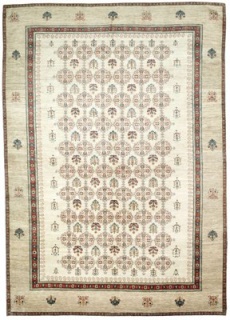
Sisal Rugs

Sisal is the stylish and environmentally friendly flooring choice that more and more people are welcoming into their homes and businesses. Sisal rugs are durable and can last ten years or more with proper care. Sisal fibers can be blended with other natural fibers such as wool or hemp to create an even wider spectrum of eco-friendly flooring choices.

What Is a Sisal Rug?

Sisal rugs are floor coverings made from fibers harvested from the leaves of the Agave sisalana cactus. The plant is indigenous to Mexico’s Yucatan peninsula however most commercial sisal today is grown in Brazil, Kenya and Tanzania. The fibrous cords are extracted from leaf pulp through a process known as decortication.

Traditionally, sisal fibers have been used to make rope, twine and cardboard-like materials like dartboards. Contemporary interest in eco-friendly household items, however, has spurred an interest in sisal carpets and other natural sisal rugs.

A sisal carpet is basically a rug woven from sisal twine. Since sisal is a coarse material, it’s often blended with the natural fiber wool to make softer wool sisal rugs. As sisal tends to be slippery, many sisal rugs are manufactured with latex backing or bindings made from wool, canvas, cotton and other materials to help them cling to the floor better. A thin rug pad will also help keep your sisal flooring in place.

What Are the Benefits of Buying Sisal Flooring?

Sisal flooring has many advantages. In most situations, sisal area rugs are extremely resilient, and won’t show compression marks from heavy patterns of use. You can see the pattern of the weave in sisal rugs, and this gives them beautiful, complex textures that make them look handmade even when they are machine-produced

Sisal fiber is naturally stain resistant, which means you will unlikely need to use chemical products on your flooring to keep it looking beautiful. This creates a much safer environment for children, pets and those household members with chemical sensitivities. The molecular properties of the sisal fiber make it an excellent acoustic insulator, and it is a very poor conductor of electrical impulses, which means it won’t build up static electricity on dry days the way carpets made from synthetic fibers do.

Sisal is an extremely eco-friendly and affordable material. The sisal agave cactus absorbs far more carbon dioxide than it generates over the course of its life cycle and can be cultivated without the use of chemical fertilizers or pesticides. Its production is also an increasingly important part of the economy for developing African nations.

Buying a sisal rug comes with some sagely advice. Sisal is a natural fiber made from organic plant matter, therefore we recommend you choose a different fiber rug for exterior use or for flooring used in high humidity areas like bathrooms and kitchens. When sisal fibers absorb water from the air, they expand. Damp sisal can also become a medium for mildew and bacterial growth.

As sisal can be slippery, if you’re going to use a sisal stair runner or a sisal runner in other parts of your home, make sure it has a backing or binding made from a material that gives it greater grip with the floor.

If you’re looking for high-quality, durable floor coverings that are an environmentally friendly alternative to synthetic carpets, think sisal.
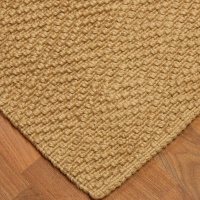
Jute Rugs

When you choose a jute rug, you have an attractive floor covering and you also have the benefit of flooring that will last. Biodegradable jute carpet is an excellent choice for the contemporary shopper who’s environmentally aware.

What Is Jute?

Jute is the most cultivated plant fiber in the world after cotton however because nearly 85 percent of jute cultivation is concentrated in India’s Ganges delta region, this natural fiber is not very well known to Westerners by name. Westerners are very familiar with products made from jute fiber however, particularly burlap, sack cloth, twine and rope.

What Is a Jute Rug?

Traditionally, the world’s most gifted Oriental carpet makers used jute backing for their masterpieces of interwoven wool, cotton and silk yarns. More recently, jute has come into its own as a primary material for rugs, carpet and other floor coverings.

Jute fiber can be spun into a strong and durable thread. Jute fibers tend to have a rough texture, but when jute cords are separated out into finer threads, those threads feel like silk. Finer jute threads are what are used to create jute carpet and jute rugs.

In its natural state, jute fiber has an attractive golden sheen that has led to jute’s nickname as the Golden Fiber. Jute also takes dye very well, and is often blended with other natural and synthetic fibers to create textured patterns in carpet.

Jute carpet is typically produced using broadloom methods or by braiding. Jute will adhere to your floor quite well so it doesn’t need a latex backing and often a cotton or a wool border will be added to a jute area rug for aesthetic reasons.

Like floor coverings made from other natural plant fibers, a natural jute rug is a good option in environments that do not have or retain a lot of moisture. If jute becomes wet repeatedly, the fibers can lose their strength and begin to break and they may also become a medium for mildew and bacteria. Jute can also become brittle and yellow if it’s exposed to direct sunlight for prolonged periods of time.

What Are the Benefits of Buying a Jute Rug?

Jute area rugs are beautifully textured pieces that are perfect for accenting specific areas of the rooms they’re in. Jute is probably the least expensive natural material available on the market today, so jute floor coverings tend to be relatively inexpensive. Jute fibers are among the strongest of all organic fibers, so a jute rug will last for a long time and stand up to hard use. Jute floor covering also requires very little maintenance; routine vacuuming will remove most dirt and dust. Jute is also a poor conductor of electricity, so static electricity won’t build up in a jute rug. Unlike seagrass and sisal, jute is not a particularly slick material so a jute runner on your staircase is a great option.

Best of all, jute is an ecologically friendly fiber. It doesn’t require pesticides or chemical fertilizers to grow, and it’s completely biodegradable.

Jute floor coverings are attractive, long lasting and represent some of the very best values consumers will find in natural floor coverings today.

Bamboo Rugs

Bamboo rugs and bamboo floor mats are a stylish decor choice for people who are looking for a way to lessen their carbon footprint while still optimizing the attractiveness of home and business environments.

What Is Bamboo?

Although some bamboo plants have woody stems and grow to great heights, bamboo is not a tree at all but a species of grass with a hard, hollow stem connected to an underground stem called a rhizome. There are over 1,400 species of bamboo around the world, and the plant is indigenous to all continents except Europe and Antarctica. Human beings have been using the bamboo plant for thousands of years in everything from construction projects to holistic medicine. Bamboo is one of the most commonly used materials across the globe for natural fiber rugs and floor coverings.

What Is a Bamboo Rug?

There are two types of bamboo flooring. Traditional bamboo floor mats incorporate untreated bamboo canes into their design. More recently, manufacturers have been extracting bamboo cellulose from the woody material and using those cellulose fibers in a variety of textile products including carpet. Bamboo cellulose fibers behave a lot like rayon although they don’t flatten underfoot quite as quickly and are less susceptible to molds and mildews.

Bamboo area rugs made from bamboo cane can give any room an Asian flair. A cane bamboo mat is typically square or rectangular in shape, and is usually backed with non-skid materials such as latex or felt. Often bamboo mats are manufactured with a cotton border. The canes can be treated to show off a range of beautiful hues from straw yellow to burnt sienna.

What Are the Benefits of Buying a Bamboo Rug?

Bamboo area rugs are eco friendly rugs. Bamboo grows quickly: Most commercial bamboo is ready for harvesting two years after it is planted. Harvesting bamboo doesn’t kill the host plant either; the underground rhizome will produce another crop of bamboo canes the following year and for many years to come. An acre of bamboo produces far more oxygen than a comparable acre of hardwood trees, and bamboo requires far less water than hardwood. Bamboo is also entirely biodegradable: It decomposes relatively rapidly into a nutrient-rich compost.

Bamboo mats are great for defining specific areas of the rooms they’re in and for protecting the carpeting or other flooring underneath them. They make slick, strong surfaces underneath an office chair, for example, so that the wheels of the chair don’t damage underlying rugs or hardwood floors. Felt casters should be used under furniture legs so that the bamboo slats aren’t scratched by the furniture.

Bamboo isn’t damaged by moisture. If you spill something on a bamboo area rug, you can wipe it right up without worrying about damaging the mat. Unlike natural area rugs made of sisal or seagrass, a bamboo rug is a perfect addition to a bathroom, kitchen or other room in your house with high humidity however bamboo will fade if it’s exposed to direct sunlight for prolonged periods. Either place your bamboo area rugs away from the sunny parts of your house, or rotate the rugs regularly to avoid sun damage.

Bamboo is a natural floor covering that is as versatile and inexpensive as carpets and other floor coverings made from synthetic fibers but is far more environmentally friendly.

Wool Sisal Rugs – Custom Rugs Made to Order

Sisal and wool are one of the most popular blends of natural materials used in contemporary floor coverings today. The two materials complement each other very well and in particular to make the beautiful wool sisal rugs.

Sisal is a very stiff fiber harvested from the sword-like leaves of the Agave sisalana succulent. Traditionally, the use of sisal fibers has been reserved for products like rope, cordage and twine. The tough, scratchy fibers were considered too coarse to use in floor coverings.

Wool is harvested from the fleece of sheep and certain other animals. Human beings have been using wool to create textiles for thousands of years, and wool is widely considered to be one of the most sustainable of all natural fibers.

Sisal fibers are often blended with wool to offer wool sisal rugs and wool sisal carpet that combine the textured look of sisal with the soft feeling of wool. Sisal wool carpet is latex-backed, and the sisal and wool yarn is woven across the backing by machine. Standard sisal wool blends use 60 percent wool and 40 percent sisal. Cashmere sisal is a looped weave that is the softest wool sisal blend underfoot.

Many people who buy wool sisal floor coverings prefer not to buy wall-to-wall carpet. Instead, they enjoy the look of that comes from laying multiple wool sisal area rugs across their floors. Sisal provides an excellent protection for hardwood floors in particular

The Benefits of  Wool Sisal Rugs

Sisal and wool are both naturally stain resistant fibers. Wool repels stains because it contains lanolin, a wax-like substance that evolved to provide sheep with protection from rain. Sisal repels stains due the unique molecular configuration of its fibers. This same molecular configuration also makes sisal flame resistant and an excellent acoustic insulator. Sisal is also a poor conductor of electricity so wool sisal area rugs in your home will actually repel static electricity and that is a bonus for homeowners who live in drier climates.

Because sisal is such a rigid fiber, a sisal wool rug makes a perfect floor covering for high traffic areas in your home. Sisal wool carpet comes in a variety of patterns, colors and weaves, and wool’s naturally hypoallergenic properties makes it an ideal choice for households whose inhabitants have allergies or are environmentally sensitive in other ways. Wool also has naturally fire-retardant properties thanks to its high lanolin content.

An additional and appealing benefit of both sisal and wool is that they are considered eco-friendly fibers. Sisal can be harvested several times a year from the agave plant. Wool is 100 percent biodegradable, and items manufactured with wool will last for a very long time with proper care.

Some sagely advice to protect your Wool Sisal rugs; The fiber may deteriorate with excess moisture so recommend wiping up any spills immediately and we also suggest that you use a less slippery floor covering on staircases or ensure that your beautiful wool sisal rug has a good backing to help it grip the floor.

Wool sisal carpets are available in a range of different styles, colors and sizes. With proper care, these attractive floor coverings will brighten up your home for a decade or more.


Hand Knotted Rugs – Intricate Creations Weave Beauty through the Home

handknotted_230An exquisite handmade rug is easily identifiable by its beauty. While machine-woven creations are attractive, nothing compares to the unique look of hand knotted rugs. Styles that are typical of this type are Persian rugs and Oriental rugs. Hand knotted designs are prevalent in the Oriental rug design, which was the most popular type of rug to be found with knots created by hand. Certainly other styles are available, however for both the first-time purchaser and rug connoisseur, hand knotted rugs are preferred.

How are these intricate creations made?

Techniques used to create hand knotted rugs are very old, dating back several centuries. Some techniques may vary slightly by hand movement and method; usually these variances are personal preferences passed down from a former weaver to a family member or apprentice.

Rugs are made of a pile and base. The base consists of the threads running along the carpet’s length, while the pile is the visible thread part of the rug, used to create the attractive designs. These rugs are created using a loom or frame-like instrument and cotton and wool threads. Wool and cotton combinations are the most commonly-used method, but there are rugs made completely from one type of either thread.

Another type of rug is a rug made completely from silk threads thus making it more expensive. First, the cotton warp threads are constructed on the loom, followed by weaving of wool weft threads through them. One at a time, the weft threads are knotted to the warp. Using a small hook knife called a gallob, the weaver pulls the weft pieces through the warp. After completion of each row, a comb is raked across to ensure the knots are tight and brought together thoroughly, making the rug durable. This meticulous process must be completed until the entire rug is constructed. Loose or long threads are trimmed by hand with scissors.

Hand knotting normally involves three different types of knots. Depending on the type of pattern chosen and its complexity, the type of knot used will vary from one rug to the next. Also the type of knot used depends on the preference of the artist creating the piece. Persian knots are commonly used because they allow the flexibility to create complex designs. Most rugs that have various shapes and intricate details are made with a Persian knot. Also called a “Senneh” knot, the Persian knot is asymmetric. This means that the weft threads are open either to the left or right. To put into perspective the amount of knots used, some types of Persian creations may have up to 700 knots per inch.

Turkish knots, also called “Ghiordes” knots, are another style commonly used. This type of knot takes up more room per inch on the rug, meaning that there is less possibility to create an intricate design. These types of knots are thicker and yield a more plush result. The Turkish knot is symmetrical; wefts are wrapped around two warps, meeting together in the middle.

Similar to the Turkish knot is the Jufti knot. Their similarities are actually almost identical, except a Jufti knot wraps the wefts around four warps, as opposed to the traditional two warps used in a Turkish style. Although it is not as common a technique, Persian knots are sometimes expanded to wrap around four warps; the result is also called a Jufti knot. This type of knot was formed to save time and increase the number of rugs a weaver could produce.

Quality and price are lower in a Jufti-made rug, making it an acceptable choice for people who are not concerned about the lifetime of their new purchase. Because this style also creates an uneven look, the rug will wear oddly. For rugs purchased with the intent of long life, a Persian or Turkish knot style is preferred; normally the price will reflect the knot style.

Sarough Rugs – A Rich History

Sarough rugs, sometimes called Saruk or Sarouk rugs, are oriental rugs based on the exquisite, hand woven floor coverings that were first created in the 19th century by artisans living in Sarough, Farahan, Ghiassabad and other villages lying near the Iranian city of Arak in the central province of Markazi.

Where Do Sarough Rugs Come From?

The village of Sarough is located approximately 20 miles outside of Arak in the central Iranian province of Markazi, a city well-known for its carpet-making. These days, Sarough rugs do not necessarily come from Sarough, though. The term “Sarough” is reserved for all high-end Persian carpets from this region, carpets that are still woven by hand. The term “Arak carpet” is more commonly used for the machine-woven rugs that come from this area.

What Is the History of the Markazi Province?

Markazi is a region in Iran with a long history of human settlement. In the first century B.C., the province was the center of the great empire of the Medes, one of the four great powers of the ancient Near East.

The history of carpet-weaving in this region, however, only dates back to the 19th century when the demand for carpets for American markets spurred the creation of characteristic rugs that used the high quality wools and natural dyes found in the area. The delicate nature of the dyes were not quite bright enough for the American market, so often parts of the rugs were re-dyed a bright raspberry or blue color after they were imported into the United States. This is the origin of the Sarough rug’s distinctive color palette.

How Did Sarough Rugs Originate?

In the late 19th and early 20th century, the village of Sarough became renowned for exquisite, hand-woven carpets with floral designs that were primarily sold in the American market. Sarough rugs manufactured before the First World War showed a strong Turkish influence and tended to sport a classic central medallion design while rugs manufactured after the War made use of floral patterns on a raspberry backdrop.
One distinct subset of Sarough rugs is called Feraghan or Farahan Saroughs. These are room-sized carpets with an extremely fine weave comprised of asymmetrical wool knots on a cotton background. Farahan Saroughs typically showcase traditional medallion patterns surrounded by a floral border in a soft apple green or pistachio color.

Distinguished Designers from Arak

Some Arak rug designers became very well known within Iran for the carpets produced from their designs. Among these designers were:

• Isa Bahadori: Born in 1908 in Arak, Isa Bahadori gained international prominence when one of the rugs he designed won a coveted gold medal at the Brussels Exhibition.
• Asadollah Daqiqi 1905 – 1962: Asadollah Daqiqi learned the art of carpet design at the Mirza Abdollah Raisabadi School in Arak, and went on to establish one of Arak’s leading rug design centers.
• Zabihollah Abtahi: In the early part of the 20th century, Arak’s most famous rug designer was Zabihollah Abtahi who got his start in the rug industry in 1907 at the age of ten. Zabihollah Abtahi is best known for his exquisite Arabesque and Palmette Flower designs.

  • Asadollah Abtahi
  • Abdolkarim Rafiei
  • Asadollah Ghaffari
  • Jafar Chagani
  • Seyed Hajagha Eshghi (Golbaz)
  • Hosein and Hasan Tehrani
  • Zabihollah Abtahi

Are Sarough Rugs Still Being Made in the Traditional Way in the Region?

Carpet weavers in Arak continue to hand produce beautiful Sarough rugs today. Sarough rugs continue to be created by artisans who adhere closely to traditional hand-looming methods. Modern consumers have more sophisticated tastes when it comes to subtle colors, so Sarough rugs are no longer re-dyed after they are woven to intensify their hues.

Sarough carpets are woven from high quality wools using the traditional Persian knot, which means they will stand up to decades of use. Elegant, beautiful and durable, Sarough carpets are among the most popular carpets coming out of Iran today.


Beautiful Bamboo

BAMBOOFORESTOver 2.5 billion people around the world depend upon bamboo for a large part of their sustenance, making bamboo one of the most economically important plants in the world. Citizens in industrialized nations may be most familiar with bamboo as a decorative garden plant. Increasingly, however, they’re becoming familiar with its commercial uses.

What Is Bamboo?

Bamboo is one of the fastest growing plants in the world. With the right soil and climate conditions, bamboo shoots can grow 48 inches in a single day. This is because there is no such thing as a bamboo tree as such. The bamboo plant is a type of grass connected to an underground network of stems called a rhizome that distributes nutrients and water very quickly to bamboo canes above the soil level. Strictly speaking, a bamboo forest is really a bamboo meadow.

There are approximately 1,400 species of bamboo, ranging from plants that are under 12 inches high to towering specimens that top 100 feet. They have an extremely unusual flowering cycle that scientists do not fully understand: All the bamboo of a single species, no matter where they are in the world, will flower at exactly the same time. The interval between flowering cycles can be as long as a century.

Human beings use bamboo as a food source, a material in household goods such as bamboo furniture, bamboo blinds and bamboo curtains, and as a source of construction materials. In traditional Japan and China, thin strands of bamboo were woven into bamboo shoes and hats. More recently, cellulose has been extracted from bamboo and used in the manufacture of rayon-like bamboo clothing.

Bamboo is one of the perennial plants most frequently incorporated into gardens in warm, tropical climates. Home horticulturalists must keep a close eye on their bamboo garden plants though, because some species of bamboo can get out of control and take over their landscape.

Where Does Bamboo Grow?

Although bamboo is most closely associated with eastern Asia, in fact it grows wild on every continent except Europe and Antarctica. Although most bamboo plants grow best in warm, tropical climates with lots of precipitation, bamboo does grow in climates where winter temperatures dip below freezing. In these environments, above-ground shoots will shrivel and die in the colder months, but the rhizome will survive and send up new plant shoots as soon as the weather becomes warmer.

The world’s three largest bamboo exporters are China, Indonesia and Vietnam. Singapore and Hong Kong are the world’s two largest commercial processors of bamboo.

Is Bamboo an Eco-Friendly Choice For My Home?

Bamboo is a woody material that grows very quickly, which makes it an eco-friendly alternative to the use of other types of woods in a world that is increasingly faced with the threat of deforestation. It takes between 30 and 50 years for a hardwood tree to grow to a size that’s suitable for commercial harvesting. In contrast, bamboo is ready for harvest between three and five years. Bamboo produces far more oxygen than a hardwood forest of a comparable size and it grows well without the use of pesticides. Bamboo can be used to prevent soil erosion and all parts of the plant are biodegradable. All these properties make bamboo an environmentally friendly plant and a great wise choice for floor coverings.

What Products Can I Buy That Are Made From Bamboo?

Many different types of products can be made from bamboo.

• Bamboo construction materials: In many parts of Asia, traditional housing was crafted either entirely from bamboo or from a bamboo frame plastered with stucco, clay or cement. Experts estimate that over one billion people live in a bamboo house of some kind.

In other parts of the world, bamboo is being engineered into building materials that resemble conventional lumber in design. These materials are available at your local lumber yard. Bamboo flooring made from these building materials is an increasingly popular alternative to hardwood floors. Bamboo is also popular as a raw material for fiberboard, particle board, bamboo sheets and other types of panels.

• Bamboo household goods and floor coverings: In China, Indonesia, India and the Philippines, individuals have been creating beautiful woven rugs, mats, baskets and other household goods from bamboo for thousands of years.

• Bamboo clothing: Bamboo fibers are separated out from bamboo pulp using various mechanical and chemical processes. The resulting cellulose fibers have the silky feel and cling of rayon. Manufacturers are even making bamboo socks although they take a long time to dry so are not advisable for traveling.

• Bamboo paper: Bamboo paper is somewhat softer and more prone to tearing than paper made from hardwoods, but its brightness and optical properties make it far less prone to fading over time.

• Decorative uses of bamboo: Bamboo makes beautiful indoor plants, and it is relatively easy to train a bamboo palm into a bonsai tree.

What Is Lucky Bamboo?

LUCKYBAMBOOLucky bamboo is not a type of bamboo at all, but a houseplant related to the lily that’s native to the rainforests of Southeast Asia. It’s an easy plant to grow, and is touted along with the use of fountains, crystals and colors, as one of a variety of Feng Shui cures that can bring balance and harmony into your home and your life.

According to Feng Shui traditions, Lucky Bamboo will invite luck into your home. The type of luck depends upon the number of stalks the plant has. Be sure to display your Lucky Bamboo in an optimal place in your home or business premises where it can do you the most good, but keep it away from your pets because it is toxic.

Bamboo has much to offer as a renewable resource. It’s strong, durable, pliable and very attractive to look at. Bamboo floor coverings can be used inside and outside, and are a perfect way of defining discrete areas for entertaining and other activities.


Color and its Impact on Interior Design

Do Colors play a crucial element in interior design and the direction you go with your rug selection?

Your choice of rug will be influenced by style, size, color and very importantly whether you are buying a Persian rug for purely decorative reasons or for a functional purpose in your environment and therefore have your rug stand up to the wear and tear of traffic.

Color is a part of the essential quality of the rugs that you choose to buy.  The colors in a rug are as important as the colors in other art forms such as paintings and the beauty and appeal of the rug depends on it.

Color and its impact upon the human psyche and our environment has played a major role through time and across many different cultures with the symbolism of colors sometimes varying from culture to culture.

For example, white in many cultures represents purity and peace however in the Orient in countries such as China white is the color of mourning.  Blue is often considered the color of heaven and the night sky and symbolizes meditation and spirituality.  Red is energetic, vibrant and powerful and represents passion, creativity and growth in many cultures.  Green represents paradise that is abundant with flowering trees and plants and the faithful spring that always returns.  Green is also recognition and attainment.

The beauty and appeal of many Persian rugs lies in the myriad of beautiful rich colors often made from natural dyes or for some Persian rug enthusiasts from the more subtle neutral colors and shades that can even come from the use of camel hair in a rug.

When introducing and mixing more than one rug into your environment color and tone are important, as is the pile.  Lay the two rugs side by side during daylight hours, step back from the rugs to look at them and then half close your eyes to examine the color and tonal balance of the two rugs.

Color can influence our mood, emotions, performance and even decision making so when choosing your Persian rug you may find yourself drawn to a rug that has colors that can enhance your mood and the enjoyment of your home or office.

Sensational Seagrass – A sustainable product for home decorating

SEAGRASS IN A RIVEROne of the most popular materials for furnishings and flooring right now is seagrass. Seagrass furniture, sea grass rugs and seagrass storage baskets can be found in stores everywhere from discount retailers to high-end boutiques. Beautiful, lightweight and sturdy, seagrass can be used like wicker or rattan. It’s far more versatile than either of those two materials, though, and far more beneficial to the planet.

What Is Seagrass?

Despite its ribbon-like, grassy shards, seagrass isn’t technically a grass at all. it is a flowering plant that has evolved to live on ocean floors. The plant is more closely related to lilies than to true grasses. Seagrass grows in large beds, which resemble meadows – another reason why it is called “grass.”

Scientists say that seagrasses evolved from land plants approximately 100 million years ago in four successive waves, representing the four distinct seagrass families: Posidoniaceae, Zosteraceae, Hydrocharitaceae and Cymodoceaceae. Today, there are approximately 60 species of seagrass.

Over a billion people around the world live within 30 miles of a seagrass meadow, and have obtained their protein from animals that live in seagrass beds for thousands of years. The Seri Indians collected the seeds of the local seagrass and ground them to make flour; their harvest month is named after their word for seagrass. For at least 10,000 years, people have also been using seagrass to insulate houses, thatch roofs and stuff furniture. Seagrass flooring isn’t a new innovation at all!

In recent years, seagrass has assumed economic importance in new ways as local people begin to harvest seagrass for use in crafts like baskets, rugs and other home decor items. Many of the local communities that were hard hit by the 2004 Indian Ocean tsunami have turned to seagrass farming as a means of sustenance following the collapse of local fishing industries.

Seagrass is also a salt marsh grass grown in paddy fields which are annually flooded with seawater at the growing season and hence the name Seagrass.  The paddy fields where the seagrass grows are found predominantly across areas of Southeast Asia. Although thick and rigid, seagrass is quite smooth and its natural green color also has a light sheen to it.

The seagrass that is grown in paddy fields is more commonly used to make natural seagrass rugs. It is very affordable, resilient to stains and is also great for people with allergies as it does not draw dirt or dust as much as other fibers.

Where Does Seagrass Come From?

Seagrass that is used to make rugs is more commonly cultivated in paddy fields throughout areas of Southeast Asia. Due to the nature of the natural fiber and that it has been flooded with seawater during the cultivation process seagrass is more inclined to damage from moisture. Care needs to be taken in wet environments such as bathrooms or kitchens where there maybe excess moisture and humidity or the likelihood of mold and mildew.

Ocean Seagrasses are most often found in shallow and sheltered coastal waters. They are usually anchored in mud or sand. The highest concentrations of seagrasses are found along Africa’s eastern coast and the coastal waters off Madagascar, the Seychelles, and Maldives.

Ocean Seagrass beds are visible to astronauts in outer space who have identified a nearly continuous meadow off the western and southern coasts of Australia that stretch for 770 miles, and another south of the Florida Everglades that comprises 5,380 square miles.

What Products Are Made from Seagrass?

Many different types of products are made from seagrass. One of its most popular uses currently is in beautiful sea grass rugs and carpets. Seagrass can also be used to make anything that is currently made from wicker or rattan including couches, chairs, tables and other types of seagrass furniture as well as seagrass storage baskets, plant containers, wine racks and other decorative objects.

Seagrass is among the most stain resistant of all natural fibers. A seagrass rug has a beautiful texture and will stand up to rugged use, making it the perfect choice for a high traffic area of your home. A seagrass carpet is not treated with dyes or other toxins so it will not adversely affect the health of chemically sensitive household members. Seagrass flooring comes in a variety of beautiful natural shades that range from sage to green to brown. When you first unroll it, you may notice a subtle hay-like fragrance that dissipates over time.

What Are the Benefits of Natural Fibers?

Natural fibers are fibers derived from plants and animals. Plant fibers are derived from the stems, leaves or seeds of plants, while animal fibers come from fur, hair or cocoons. Natural fibers are made without the use of chemicals.

In contrast, synthetic fibers are made from petroleum-based polymers. They don’t breathe as easily or respond as readily to changes in temperature, so if you are wearing a garment made from synthetic fibers on a hot day, sweat will build up on your skin. This sweat can be an excellent breeding ground for fungal organisms and bacteria, which is why people who wear synthetic fibers a lot tend to suffer from far more skin irritations.

Many artificial fibers also continue to give off small amounts of volatile organic compounds (VOC) through the lifespan of whatever product they’re incorporated into. This predisposes people who wear garments made of these fibers to allergic reactions involving the skin and respiratory system. In extremely sensitive people, these VOC can even compromise the immune system. This can be a particular problem in rugs and carpets made from synthetic fibers since VOC may compromise the air quality inside your home.

If you who are interested in Ocean Seagrass Here are Some Interesting Facts

Seagrasses help the environment in many ways, starting with the fact that they help degrade human pollution that ends up going into the ocean. Scientists say that an acre of seagrass can absorb 6.4 pounds of nutrients in a year, which is equivalent to the treated wastes of 490 people.

Dense seagrass beds are estimated to have as much leaf area as an equivalent acreage of rain forests, and produce just as much oxygen. An acre of seagrass also sequesters over 7,000 pounds of carbon dioxide per year, roughly the equivalent to the emissions from an automobile traveling 4,000 miles. Although seagrasses only make up 0.1 percent of the ocean floor, they’re responsible for 11 percent of the carbon in the ocean, which makes them instrumental in trapping greenhouse gasses.

Seagrasses are also an extremely important to coral reefs because they trap sediment that might otherwise damage delicate the delicate coral. They also dissipate wave energy, sheltering coral reefs from storms.

Who Loves  Ocean Seagrass?

Seagrass beds are diverse ecosystems in which hundreds of ocean species live out their lives. They provide a nursery for species like prawns, lobsters and crabs, and provide food for juvenile salmon and other commercially important fish. Seagrasses are the primary food source for marine mammals like manatees and dugong. They’re also a major food source for sea turtles, ducks and geese.

Seagrass furniture and seagrass flooring is not only a beautiful addition to your home, it’s also a strong statement about your commitment to a sustainable future. Seagrass is naturally renewable, stain-resistant, highly durable and very attractive, which makes it a seagrass rug the perfect choice for your home.

Persian Rugs Color Your World

salmon-saroughOne of the most notable aspect of Persian rugs is their vibrant color which serves to make each of the rugs unique, a standalone from all of the others.

Before the beginning of the 20th century, the rug dye which was used in the making of the rugs was taken from insects, animals, and plants and not made synthetically. The dye recipes were passed from parent to child generation for centuries with each recipe typically being kept within particular tribes or families. The production of these beautiful carpets was a matter of great pride for both the maker and their family.

Materials Used in the Making of the Dyes

The preferred colors that are used in the dying of Persian rugs were originally obtained from day to day spices used for cooking such as saffron and turmeric. Saffron was used in the production of pure vibrant yellow whereas turmeric was used in the producing a softer, lighter color yellow. Another ingredient which was used to produce coloring was the mulberry bush but not the bush itself. Instead, there was a fungus which grew on mulberry bushes and, when used, produced a yellow-green color.

Cochineal insect has been used in food coloring during baking in order to form a red color. However, for a period of multiple centuries, the insect was used as a main ingredient in the coloring of Persian rugs. The word “crimson” also comes from a type of insect which also produced a red dye. This insect, the kermes insect, is typically found within oak tree bark and is known for its vibrant red coloring. Shades of red along with violet and pink were also formed from a plant, a common plant in Persia known as Madder. The way in which the plant is treated determines which color the plant produces.

Blue dyes were also created from a plant, the indigo plant which originates in China and India. Black is a not a common color found in the Persian rug due to the negative impact that this rug dye has on the carpet. The process by which black dye is obtained, the soaking or iron shavings within vinegar, has been shown to be corrosive to wool.

Additional dyes were created using a combination of the above ingredients along with others. An example is brown. This color was produced using the madder combined with green walnuts. This was not a popular color, however, as brown tended to fade the area in which the dye was used.

The rugs may also be colored using other exotic substances such as silver or gold colored thread. These threads were most often used in Persian rugs which were intended as gifts for kings or rulers of other countries with which peace was desired.

 Process of Dying

Each Persian rug is completely unique with the coloring process being the main reason for this individuality.

Instead of inserting the whole skein of yarn into the dye, each strand is dyed individually and then placed into the air to dry. Not only were the threads exposed to the air, they were also exposed to other external elements which caused variation in each thread, regardless of whether they were dyed the same color.

 Synthetic Dyes

The year 1870 saw the introduction of synthetic dyes to the regions around the Eastern coasts with these dyes eventually being used by the interior nomadic peoples who were responsible for the dying and weaving of Persian rugs. Synthetic dyes were less expensive to produce and made the process of producing the rugs more rapid.

In the year 1903, a king of Persia banned the aniline dyes due to the fading which occurred when the rug was exposed to water and light. During the 1920s, chrome dyes were introduced with the majority of weaving done today involving the use of these dyes. Despite the introduction of these dyes, natural coloring is still utilized in the manufacturing of rugs in rural villages.